

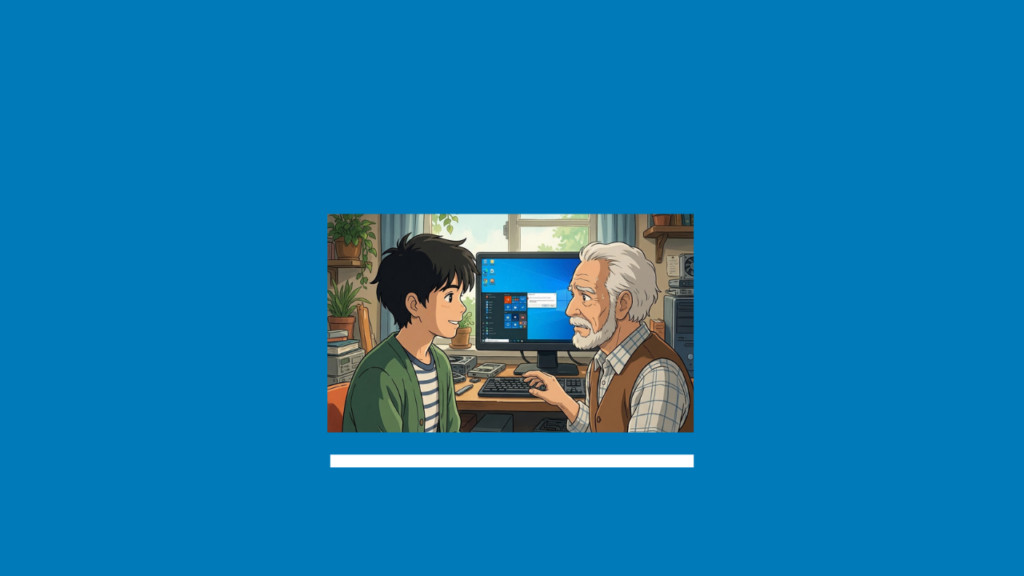
Family computer Issues
Something my mother says that strikes fear into my heart whenever I visit: ‘Would you mind having a look at my computer while you’re here?’
She’s “lost” an email she was writing. She can’t find the photo my sister sent her and she doesn’t know the wifi password though she knows she wrote it down somewhere.
It’s hard enough when the person you’re talking to has little tech savvy but when that person is family, sensitivities are high. A raised eyebrow or the wrong tone of voice can trigger World War III. And of course, it’s not just your mum; it’s blokes and siblings and grandparents.
It’s hard for them to ask. They’re embarrassed. And it’s hard to respond if you’re under time pressure, not sure how to help, or you told them last time.
Here are some thoughts.
“The computer” is several Problems
Part of what makes family tech support so chaotic is that “can you help with the computer” covers a lot of things bundled into one request. Troubleshooting is a different skill from talking someone through recovering a locked account, or explaining how to use an app. The family member who’s brilliant at one of these isn’t automatically the right person for the others.
It’s worth actually thinking through who’s good at what – rather than defaulting every time to whoever’s the “computer person” by reputation, or whoever happens to answer the phone first.
Skill isn’t the same as patience
This is the one that trips families up the most. The most technically capable person in the household is sometimes, honestly, the worst possible teacher – they assume knowledge, they grab the mouse so they can just do it themselves, and sometimes they sighing audibly, triggering indignation or shame.
The best person to walk Grandad through recovering his email password is often not the most technical person in the family — it’s whoever can explain the same three steps for the fifth time without a trace of irritation in their voice. That’s a different skill from technical competence. Who is good at that?
Can a teenager actually help? More than you’d think
Many teenagers have surprising patience. For anything involving messaging apps, photos, video calls, or social media, they’re frequently the most naturally capable person in the house – this is their territory. On the other hand, anything involving hardware faults, or a judgement call about whether something’s worth repairing, that’s not a fair thing to hand a 15-year-old.
And some teenagers have exactly zero patience. Worth actually testing rather than assuming based on age alone.
Teach the “why,” not just the “click here”
Whoever ends up helping, there’s a real difference between fixing something for someone and helping them understand it enough to spot the same problem next time. This matters most with online safety – a relative who’s been shown, once, why a scary “your computer is infected” pop-up is fake is in a much better position than one who’s just had it closed for them each time it appears. (Our guide on the free scan antivirus trap is a good one to sit down and go through together.)
The goal isn’t to turn every relative into a confident tech user overnight. It’s to lift confidence and shrink the pile of things that cause panic.
Teach one on one
The worst dynamic is often tutoring your mum while your dad looks on. He’s going to interrupt. Separate your parents/grandparents while you instruct or fix. Any competition for attention will raise blood pressures.
When it’s bigger than a family favour
Some things are genuinely beyond a well-meaning relative – a hardware fault, a drive that’s failing, anything where the cost of a wrong guess is losing photos or data. You just need to know where the limits are.
When it’s past what the family can sort out between them, we’re happy to help – plain-language explanations included, and it’s part of our job to not be judgemental.
